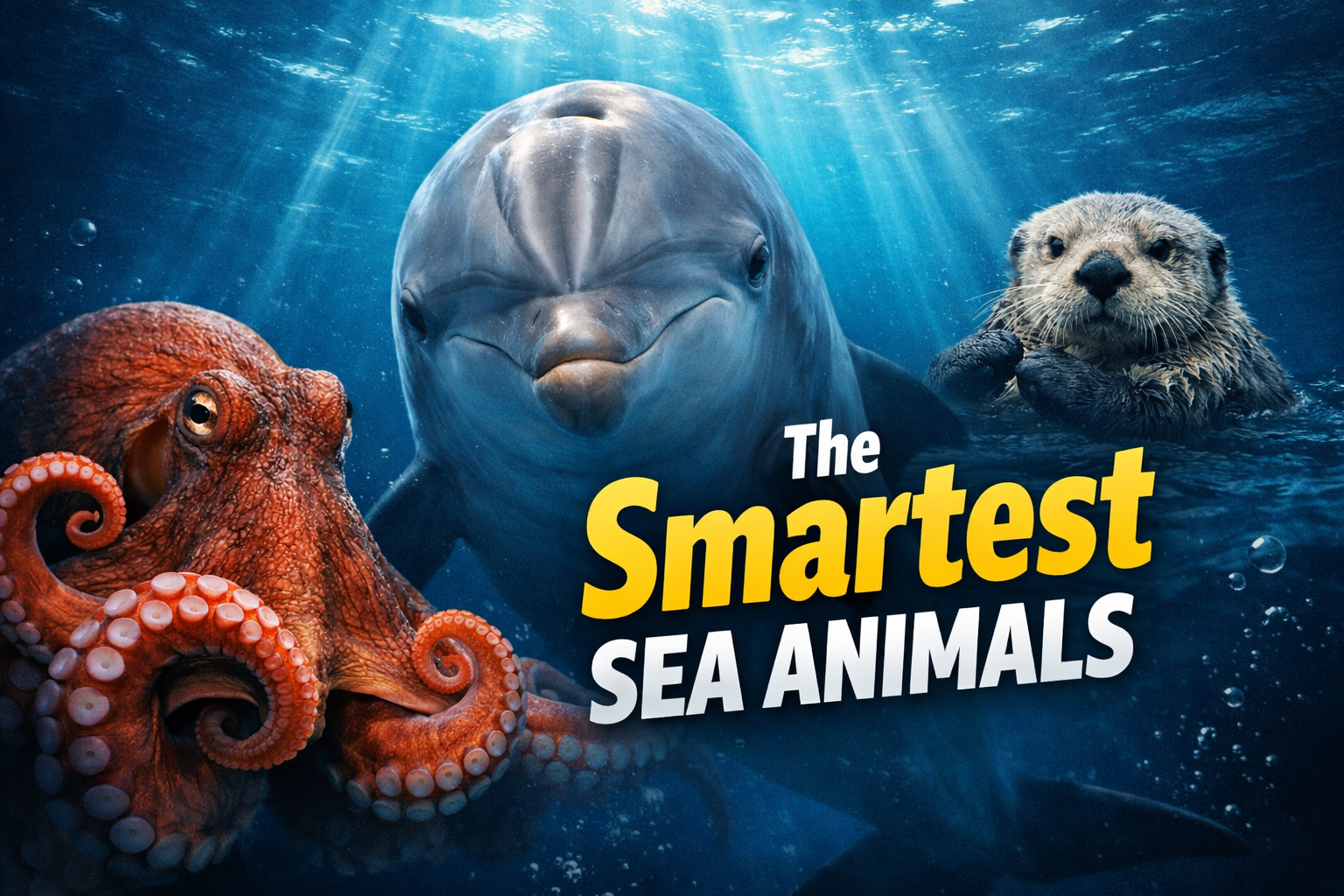
The Smartest Creatures in the Ocean: Intelligence Beneath the Waves
The ocean conceals some of Earth's most remarkable minds. From octopuses that solve complex puzzles to dolphins that recognize themselves in mirrors, marine intelligence rivals and sometimes surpasses that of terrestrial animals. These underwater geniuses demonstrate problem-solving abilities, sophisticated communication, tool use, and even cultural transmission of knowledge—behaviors once thought exclusive to primates and humans.
Why Ocean Intelligence Is So Fascinating
Intelligence evolved independently across different branches of life in the ocean. While land mammals developed large, complex brains over millions of years, ocean creatures took entirely different evolutionary paths to achieve cognitive sophistication.
Marine intelligence challenges everything we thought we knew about how brains work. Octopuses, for instance, have most of their neurons distributed throughout their arms rather than centralized in their heads. Dolphins developed echolocation so advanced they can "see" inside other animals' bodies. Whales maintain cultural traditions passed down through generations spanning centuries.
1. Octopuses: The Alien Geniuses
If intelligence evolved elsewhere in the universe, it might look something like an octopus. These eight-armed cephalopods possess cognitive abilities that seem almost impossible given their evolutionary distance from mammals.
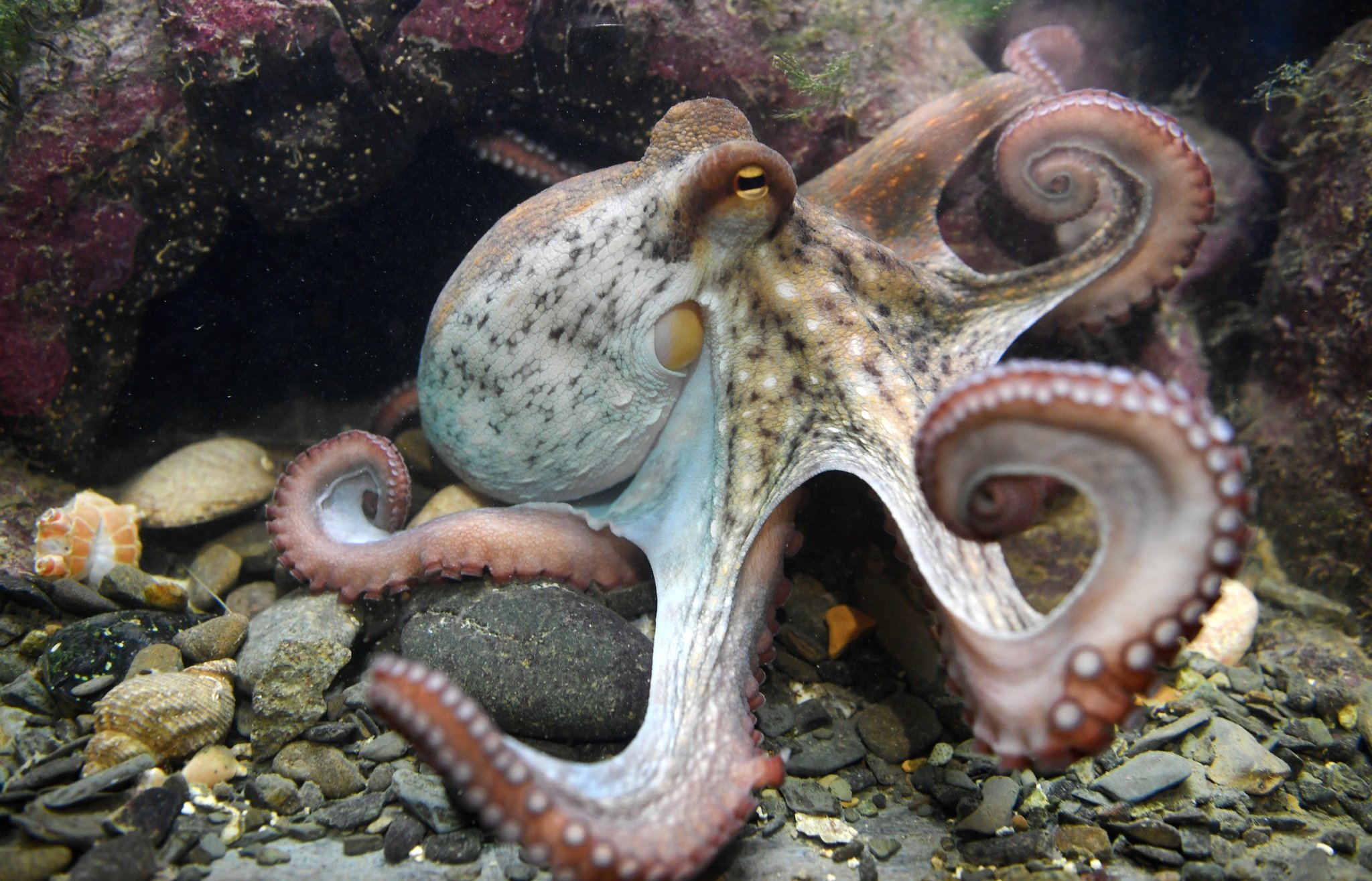
An octopus uses coordinated movements to unscrew a jar lid—a task requiring planning, memory, and fine motor control.
Extraordinary Cognitive Abilities
Octopuses demonstrate intelligence that rivals some primates:
- Problem-solving mastery: Octopuses can open child-proof bottles, navigate mazes, and figure out complex puzzles on the first attempt without trial and error
- Tool use: They collect coconut shells and use them as portable shelters, demonstrating planning for future needs
- Observation and learning: Octopuses learn by watching other octopuses, a cognitive skill previously thought limited to vertebrates
- Escape artistry: Famous for squeezing through impossibly small gaps and unscrewing aquarium lids from the inside
- Personality and play: Individual octopuses show distinct personalities and engage in play behavior with objects
The Distributed Brain System
Unlike any other intelligent creature, octopuses operate with a radically decentralized nervous system. Their eight arms contain autonomous neural networks capable of complex actions without direct brain input. An octopus arm can continue exploring even if separated from the body, demonstrating the remarkable independence of these neural clusters.
This distributed intelligence allows octopuses to perform multiple complex tasks simultaneously—one arm solving a puzzle while others hunt for food and another camouflages the body to match surrounding rocks.
2. Bottlenose Dolphins: The Ocean's Social Masterminds
Dolphins possess brains that rival human brains in complexity and, proportionally, are larger than those of great apes. Their cognitive abilities include self-awareness, abstract thinking, and complex social intelligence that allows them to navigate intricate underwater societies.
Remarkable Intelligence Markers
- Mirror self-recognition: Dolphins recognize themselves in mirrors, a test of self-awareness passed by only a handful of species including humans, great apes, elephants, and magpies
- Signature whistles: Each dolphin creates a unique "name"—a signature whistle that others use to call them, demonstrating individual identity concepts
- Cooperative hunting strategies: Dolphins coordinate complex group hunts using sophisticated communication, with different individuals playing specialized roles
- Tool use: Some dolphins wear marine sponges on their rostrums to protect themselves while foraging on the seafloor—a behavior passed from mothers to daughters
- Cultural transmission: Knowledge and behaviors spread through dolphin communities through teaching, creating distinct regional "cultures"
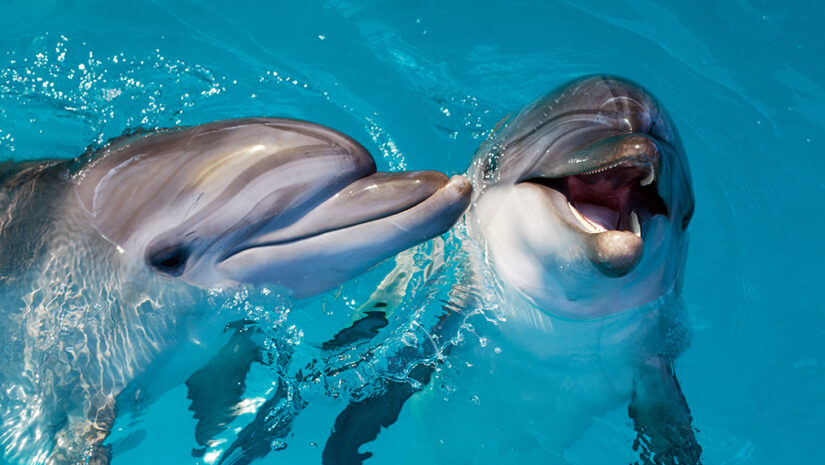
Bottlenose dolphins use a sophisticated language of clicks, whistles, and body movements to communicate complex information.
The Complexity of Dolphin Language
Dolphins communicate through an incredibly sophisticated system combining vocalizations, echolocation, and body language. Their communication includes:
- Signature whistles functioning as individual names
- Burst-pulse sounds for expressing emotions
- Echolocation clicks that can share "images" between dolphins
- Synchronized movements indicating coordinated intentions
3. Orcas: The Ocean's Apex Intellectuals
Orcas, also known as killer whales, represent perhaps the ocean's most sophisticated minds. These apex predators possess the second-largest brains of any ocean animal and demonstrate intelligence that includes cultural complexity, innovation, and even elements of language.
Cognitive Sophistication
- Distinct cultural groups: Different orca populations have unique hunting techniques, vocalizations, and social structures passed down through generations
- Teaching and innovation: Orcas deliberately teach their young specialized hunting techniques, with some populations creating entirely novel strategies
- Cooperative intelligence: Coordinate wave-washing techniques to knock seals off ice floes, demonstrating advanced planning and teamwork
- Vocal learning: Orcas can learn and mimic new sounds, including human speech patterns and other animal vocalizations
- Emotional depth: Display grief behaviors, caring for deceased offspring for days and showing signs of mourning
4. Sperm Whales: The Deep-Thinking Giants
Sperm whales possess the largest brains on Earth—six times heavier than human brains—and demonstrate cognitive abilities that continue to baffle researchers. These deep-diving giants maintain complex social structures and communication systems we're only beginning to understand.
Evidence of Advanced Intelligence
- Massive brain capacity: 17-pound brains with highly developed regions associated with social cognition and communication
- Codas and dialects: Use rhythmic click patterns called "codas" that vary between family groups, functioning like language dialects
- Multi-generational knowledge: Grandmother whales pass down information about distant feeding grounds and migration routes
- Babysitting networks: Females cooperatively care for calves in sophisticated childcare arrangements
- Cultural identity: Clans share vocal patterns that identify group membership, maintained over vast ocean distances
5. Manta Rays: The Unexpected Intellects
Manta rays, with their enormous wingspans and graceful movements, possess surprisingly large brains and demonstrate cognitive abilities that challenge assumptions about fish intelligence.
Cognitive Capabilities
- Self-recognition: Pass the mirror test, repeatedly inspecting their own reflections and performing unusual movements to test the reflection
- Social learning: Learn from observing other mantas, particularly regarding feeding techniques
- Long-term memory: Remember feeding locations and return to the same cleaning stations year after year
- Problem-solving: Navigate complex environments and remember solutions to obstacles
- Playful behavior: Engage in activities with no apparent survival purpose, suggesting capacity for play and curiosity
6. Sea Otters: The Tool-Using Innovators
Among marine mammals, sea otters stand out for their remarkable tool use and problem-solving abilities. These charismatic creatures demonstrate planning, memory, and innovation.
Intelligent Behaviors
- Rock tools: Use stones as anvils to crack open shellfish, selecting specific rocks and keeping them in skin pockets
- Technique specialization: Individuals develop preferred methods for opening different prey types
- Social learning: Young otters learn tool-use techniques by watching their mothers
- Kelp use: Wrap themselves in kelp forests to avoid drifting while sleeping, demonstrating environmental awareness
- Rock preferences: Some otters keep favorite rocks for years, showing attachment to specific tools
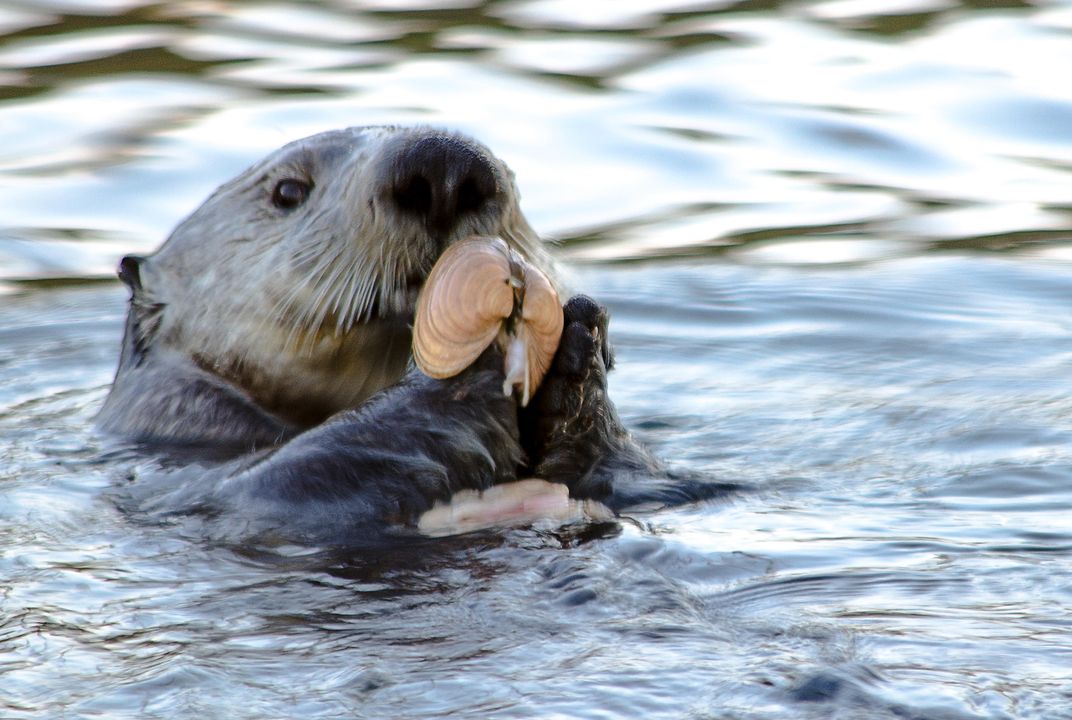
A sea otter demonstrates sophisticated tool use—balancing on its back while precisely hammering a shell against a rock.
7. Cuttlefish: The Masters of Deception
Cuttlefish, relatives of octopuses, demonstrate remarkable cognitive abilities centered around communication, camouflage, and deception.
Cognitive Achievements
- Instant camouflage: Control millions of pigment cells to match surroundings in milliseconds, requiring complex visual processing
- Deceptive signaling: Males display courtship colors to females on one side while showing aggressive patterns to rival males on the other side simultaneously
- Future planning: Demonstrate delayed gratification, waiting for preferred food rather than accepting immediate less-desirable options
- Learning and memory: Remember and recognize individual fish and crab species, learning which are safe and which are dangerous
- Counting ability: Can distinguish between different quantities of prey, suggesting numerical cognition
How We Measure Ocean Intelligence
Scientists assess marine animal intelligence through multiple criteria, each revealing different aspects of cognitive ability:
| Intelligence Indicator | What It Reveals | Example Species |
|---|---|---|
| Brain-to-body ratio | Relative brain size suggesting cognitive capacity | Dolphins, orcas |
| Tool use | Problem-solving and planning ability | Octopuses, sea otters |
| Self-recognition | Self-awareness and consciousness | Dolphins, manta rays |
| Social complexity | Cooperation and communication skills | Orcas, sperm whales |
| Cultural transmission | Learning and teaching capabilities | Dolphins, orcas |
| Innovation | Creativity and adaptive thinking | Cuttlefish, octopuses |
The Different Paths to Ocean Intelligence
One of the most fascinating aspects of marine intelligence is how different evolutionary paths produced sophisticated minds:
Convergent Evolution: Despite vastly different ancestry, multiple ocean creatures independently evolved similar cognitive abilities:
- Dolphins and humans evolved self-awareness separately, separated by 300 million years of evolution
- Octopuses and primates both developed tool use despite having radically different neural architectures
- Fish like manta rays achieved self-recognition using entirely different brain structures than mammals
This convergent evolution suggests that intelligence arises naturally when environments demand complex problem-solving, regardless of the biological starting point.
Why Ocean Creatures Became So Smart
Several evolutionary pressures drove the development of marine intelligence:
- Three-dimensional hunting: Catching prey in a 3D environment requires spatial reasoning far more complex than on land
- Limited visibility: Murky water demanded the evolution of echolocation and sophisticated mental mapping
- Social complexity: Large groups require understanding social hierarchies, alliances, and communication systems
- Long lifespans: Many intelligent marine species live decades, allowing time for learning and knowledge accumulation
- Scarce resources: Finding food in vast oceans requires memory, planning, and sometimes cooperation
- Predator-prey arms races: Both hunters and hunted evolved increasingly sophisticated strategies
What Ocean Intelligence Teaches Us
Studying intelligent ocean creatures fundamentally changes our understanding of consciousness and cognition:
The ocean's intelligent creatures demonstrate that:
- Intelligence doesn't require a large centralized brain
- Consciousness can emerge in vastly different forms
- Cultural transmission isn't unique to humans
- Self-awareness evolved independently multiple times
- Tool use and problem-solving aren't limited to primates
Conservation and the Ethics of Intelligence
Recognizing ocean animals as intelligent beings raises crucial ethical questions about how we treat them:
- Captivity concerns: Keeping highly intelligent animals like orcas and dolphins in aquariums raises welfare questions
- Fishing practices: Bycatch traps intelligent creatures in nets, causing suffering to self-aware beings
- Noise pollution: Ship traffic and sonar disrupt the sophisticated communication systems of whales and dolphins
- Climate change: Warming oceans disrupt the complex social structures and learned behaviors of marine species
- Legal protection: Some scientists advocate for rights and legal protections for intelligent ocean creatures
The Future of Understanding Ocean Intelligence
Scientists continue making breakthrough discoveries about marine cognition:
- AI programs decoding dolphin and whale communication patterns
- Underwater observation stations revealing previously unknown behaviors
- Brain imaging studies showing neural complexity in fish and cephalopods
- Long-term behavioral studies tracking cultural evolution in whale pods
- Cross-species communication experiments between humans and dolphins
The Hidden Geniuses of the Deep
The ocean harbors minds that rival our own—creatures that think, feel, communicate, and create cultures in ways we're only beginning to comprehend. From octopuses that solve puzzles with distributed brains to whales maintaining traditions older than human civilizations, marine intelligence challenges our understanding of consciousness itself.
These underwater geniuses evolved along paths completely separate from terrestrial animals, yet arrived at similar cognitive destinations: self-awareness, tool use, social complexity, and cultural transmission. Their existence proves intelligence is not a single path but a destination reachable through countless evolutionary roads.
As we explore the ocean's depths, we're not just discovering new species—we're encountering alien minds shaped by an environment radically different from our own. Understanding these intelligent creatures doesn't just teach us about them; it teaches us about the fundamental nature of intelligence, consciousness, and what it means to think.
The ocean holds not just water and life, but minds—ancient, sophisticated, and profoundly different from our own. In protecting the ocean, we protect some of the most remarkable intelligences Earth has ever produced.